How Much Does Wholesale Gold Plated Jewelry Cost per Piece? How to Read a Factory Quote
- Share
- Issue Time
- Nov 24,2026
Summary
What goes into a wholesale gold plated jewelry quote per piece: base metal, plating spec, stones, labor, finishing and order tiers. Learn to read a factory quote, spot missing specifications and compare quotes fairly, with a red-flag checklist.
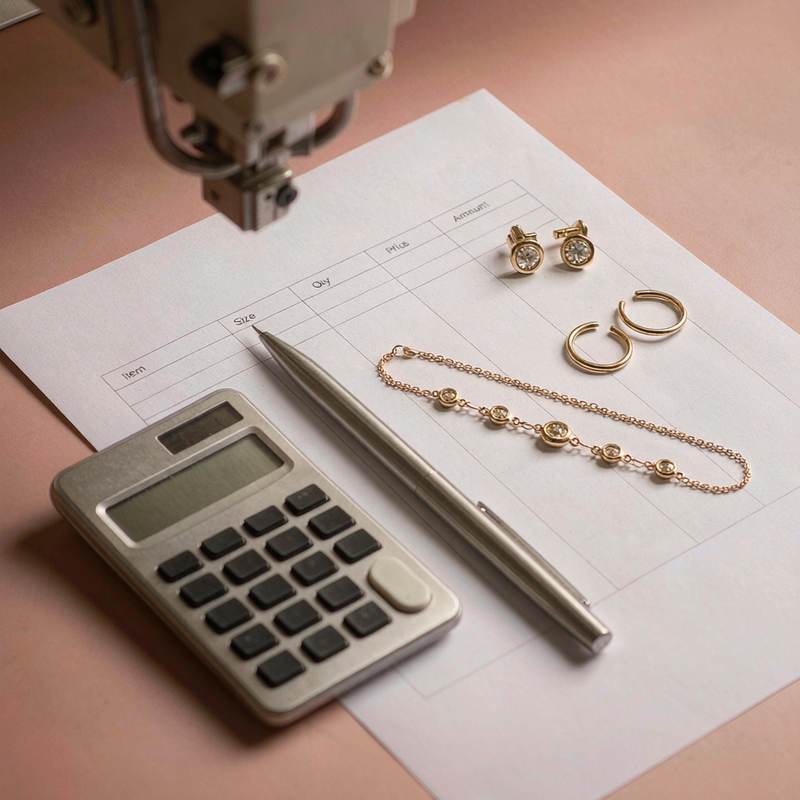
"How much per piece?" is the first question every wholesale buyer asks — and the only honest answer is that the number depends on how the quote is built. This guide dissects a factory quotation line by line, shows why the same design can carry two different prices, and gives you a checklist for comparing quotes fairly.
Direct answer: the per-piece cost of wholesale 18K gold plated jewelry is built from six quote components — base metal, plating specification, stones, labor and setting, finishing and packaging, and the order-quantity tier — all quoted on FOB terms. Two suppliers quoting the same design differently is almost always a difference in what their quotes leave unwritten. This guide covers the FOB side of the price; the freight, duty and clearance side is covered in our landed cost calculation guide.
The anatomy of a factory quote
A complete factory quotation is not one number — it is a structured document. When you receive a per-piece price, check that each of these six components is stated. If one is missing, the supplier has moved the decision somewhere you cannot see it.
Item & specification
Style number, size range, and material description. Vague entries like "alloy" instead of a named base metal are the first sign of an opaque quote.
Base metal
For fashion jewelry, brass is the standard carrier for 18K gold plating. The metal grade under the plating drives both durability and price stability.
Plating specification
Thickness measured in microns. At Hengdian (HD) Jewelry our standard is 0.1-0.3 micron 18K over brass, adjustable to custom thickness on request — and we put the number in writing.
Stones & setting
Stone grade (we set AAA cubic zirconia exclusively), stone count, and setting method. Two quotes can look identical here and differ completely in what "CZ" actually means.
Labor & setting work
Hand-set stones, multi-part assemblies and enamel work carry different labor content per piece — the part of the quote that separates a factory price from a trading-company markup.
Quantity tier & term
Per-piece pricing sits on an order-quantity ladder, and the quoted price assumes an Incoterm — usually FOB. Confirm both before comparing anything.
Why two factories quote different prices for the same style
Send one design to five suppliers and you will get five prices. The spread rarely comes from the visible line items — it comes from the specifications the quotes leave out. A cheaper quote may carry a thinner plating layer than stated or unstated, a lower stone grade behind the same "CZ" label, or thinner QC between production and packing. The background economics of plated jewelry pricing are covered in our overview of factors affecting the cost of gold plated jewelry; the practical skill is learning to read what is missing.
This is why sampling exists as a step: 5-7 free samples (freight collected) let you check the physical piece against the quoted specification before the difference between two quotes can cost you anything.
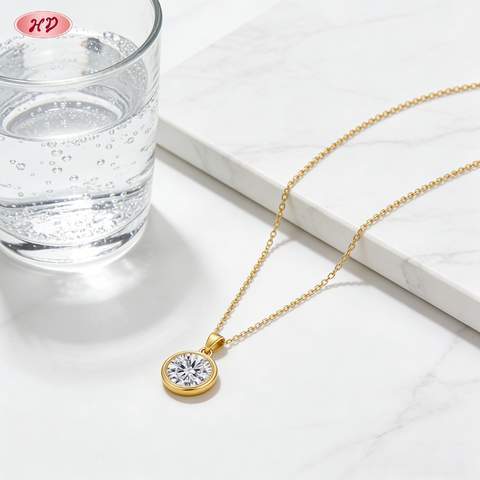
The piece you sample is the only reliable bridge between a quote and reality.
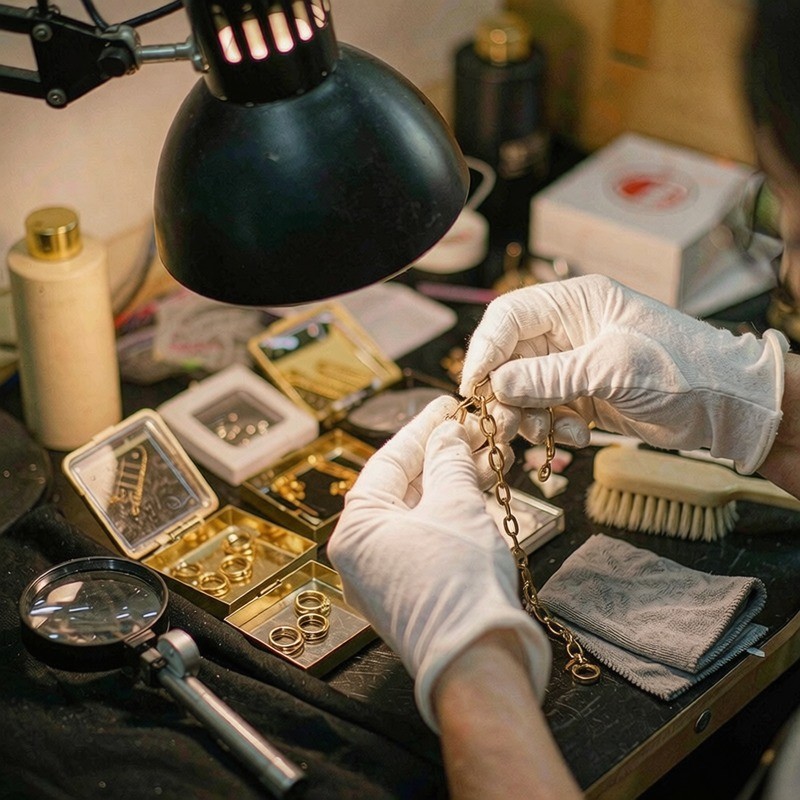
QC depth between production and packing is part of the real per-piece cost.
What a complete quote must state
- Style number with size range and a named base metal (brass, for our line)
- Plating karat and thickness in microns, in writing
- Stone grade and setting method — not just "with stones"
- The MOQ tier the price assumes, and whether it is per style
- Incoterm (FOB or otherwise) and validity period of the quote
- Sampling terms and whether the sample matches the quoted spec
A quote missing two or more of these is not cheaper — it is unfinished. For how order size shapes the whole timeline, see our MOQ, sampling and lead time guide.
How the order tier moves the per-piece price
Per-piece pricing is quoted against a quantity ladder. The exact numbers depend on the style, but the structure is fixed for our line:
| Order tier | Minimum | What the tier changes |
|---|---|---|
| Spot (in-stock) styles | 6-12 pieces per style | Entry-level per-piece pricing; ships from stock, no sampling wait |
| HAI-coded products | 36 pieces per style | Deeper stock lines priced at a different tier |
| Custom 18K plating runs | From 120 pieces per style | Custom thickness, finish and spec control; sampling becomes part of the quote |
| Custom branded packaging | From 10,000 pieces | Packaging cost enters the per-piece calculation at its own tier |
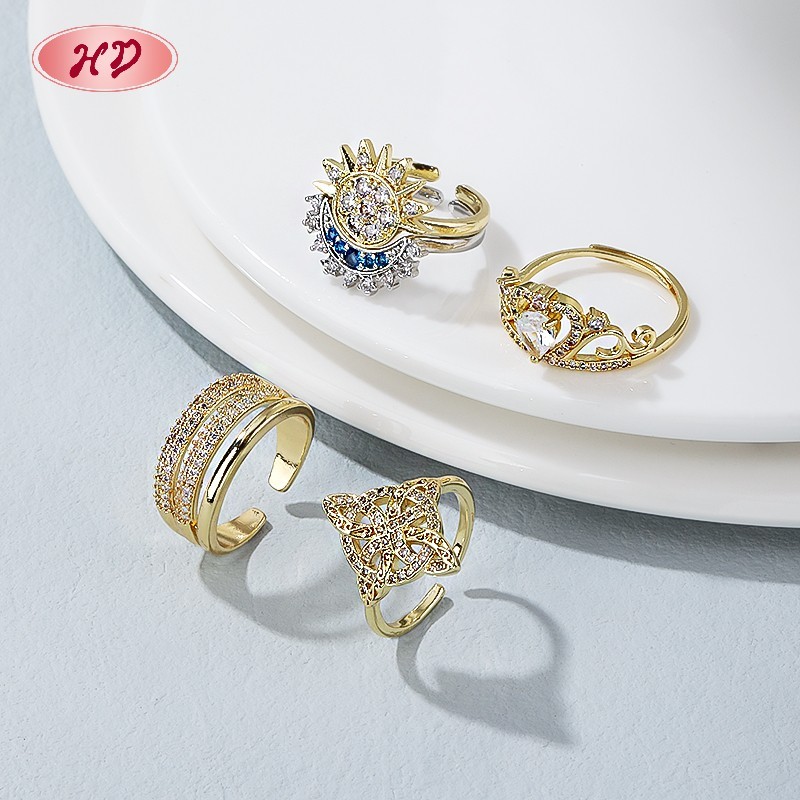
Spot pieces carry quoted specs straight from stock — the fastest tier to test.
Red flags in a suspiciously cheap quote
Plating thickness not stated · base metal described only as "alloy" · stone grade not specified · no validity date · no Incoterm · sample terms that do not match the quoted specification. Any one of these shifts cost from the visible line to the return rate you pay later.
Frequently asked questions
Why do suppliers quote different prices for the same design?
Because the quote is only as honest as the specifications written into it. Differences hide in unwritten plating thickness, base metal grade, stone quality and QC depth. Sample both quotes and the gap explains itself.
Does ordering more reduce the per-piece price?
Directionally yes — pricing sits on a quantity ladder, and higher tiers buy efficiency in setup, plating bath use and QC handling. The tiers themselves are fixed per style: 6-12 for spot, 36 for HAI-coded items, from 120 for custom runs. We confirm the exact tier pricing per style on inquiry.
Is the cheapest quote the best deal?
Almost never on its own. A quote is comparable only when every line is specified equally; the cheapest one is usually the one that specifies least. Compare complete quotes against sampled pieces, not against each other's totals.
What does the sample stage cost?
For our in-stock line, samples are free — 5-7 pieces per order — with freight collected, so the only cost of verifying a quote is the courier charge. Custom projects carry a sampling stage inside the quote itself.
How do I compare two quotes fairly?
Normalize the specification first: same base metal, same plating thickness, same stone grade, same Incoterm and tier. Then add delivery-side costs — the cheaper FOB quote can lose at the door, which is exactly what our landed cost guide walks through.
Bottom line
How much wholesale gold plated jewelry costs per piece is not one number but a structured quote: six components laid on a quantity ladder, quoted FOB. Suppliers who state their specifications in writing — as we do with our 0.1-0.3 micron 18K plating over brass and AAA cubic zirconia — are the ones whose prices survive comparison. Read the quote, sample the quote, then commit volume.
Send us your target styles and quantities, and we will quote with every specification in writing.