How to Photograph Gold-Plated Jewelry for Your Online Store & Marketplaces
- Share
- Issue Time
- Aug 31,2026
Summary
A practical guide to photographing 18K gold-plated brass and AAA CZ jewelry for online stores and marketplaces — lighting, camera settings, styling, and editing workflows that boost conversions.
Why Product Photography Decides Your Gold-Plated Jewelry Sales
Learning to photograph gold plated jewelry for e-commerce starts with the right setup. Shoppers cannot touch or try on jewelry before buying, so your photos do the selling. For 18K gold-plated brass pieces set with AAA cubic zirconia (CZ), a clean, well-lit image is the difference between a scroll-past and a confident "add to cart." This guide walks online retailers and marketplace sellers through a repeatable shoot workflow — from lighting and camera settings to styling and editing — built around the kind of wholesale jewelry Hengdian (HD) Jewelry ships to 40,000+ stock keeping units worldwide.
What You Need to Start
You do not need a studio budget to produce catalog-grade shots. A practical kit for gold-plated rings, huggie earrings, and pendant necklaces includes:
- A smartphone (recent model) or entry-level mirrorless camera with macro capability.
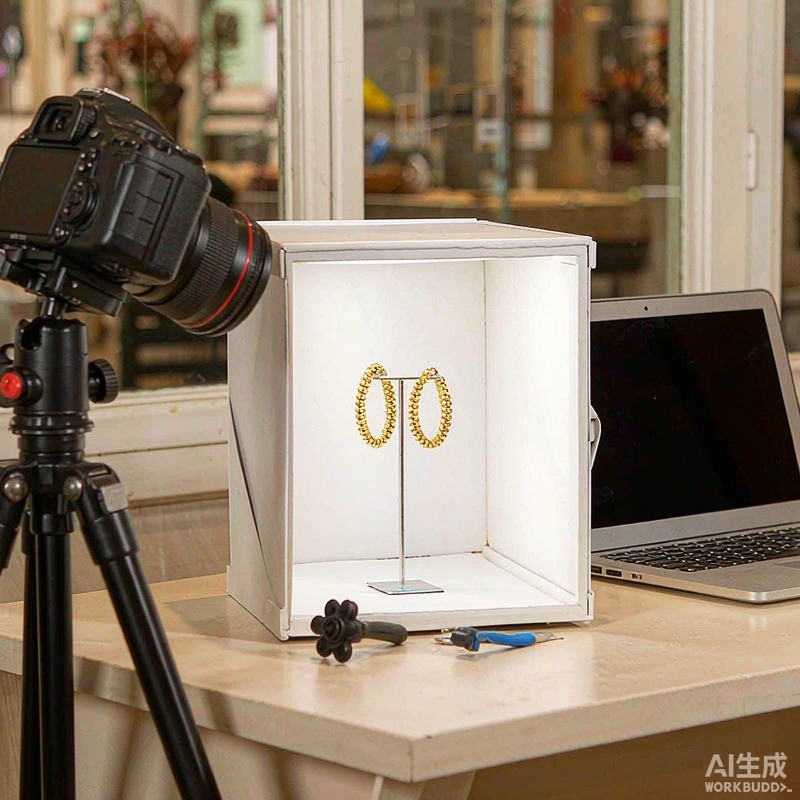
- A pop-up photo lightbox or a sweep of white poster board to kill shadows.
- A small tripod — vibration is the enemy of sharp jewelry macros.
- Two softbox or LED panel lights placed at 45° on each side.
- A reflector (white foam board) to fill the dark side of metal.
- A lint-free cloth and a air blower to remove dust before every shot.
Lighting: Soft, Diffuse, and Even
Gold-plated metal is reflective, so hard light creates hot spots and blown-out highlights. Wrap your lights in diffusers or shoot through a lightbox so the surface reads as a smooth, warm gradient. Keep the background pure white (or a consistent light grey) so marketplaces accept the image without manual cleanup. Consistent jewelry product photography is what lets buyers trust your listing before they read a word, and clean gold plated jewelry pictures convert far better than dim phone snaps. For sparkle on the CZ, a tiny rim light from behind the stone helps the facets catch light without glare.
Camera & Phone Settings
Knowing how to shoot jewelry on a tripod removes the single biggest cause of rejected marketplace photos — camera shake. Build your settings from a stable base, then refine for color.
- Aperture: f/8 to f/11 on a camera for full sharpness; phones use portrait/macro mode and tap-to-focus on the stone.
- ISO: keep it as low as possible (100–200) to avoid noise on the metal.
- White balance: set it manually to "daylight" or 5500K so the gold stays true, not orange or green.
- Format: shoot RAW when your camera allows it; for phones, use the highest-quality JPEG and edit gently.
Styling & Composition
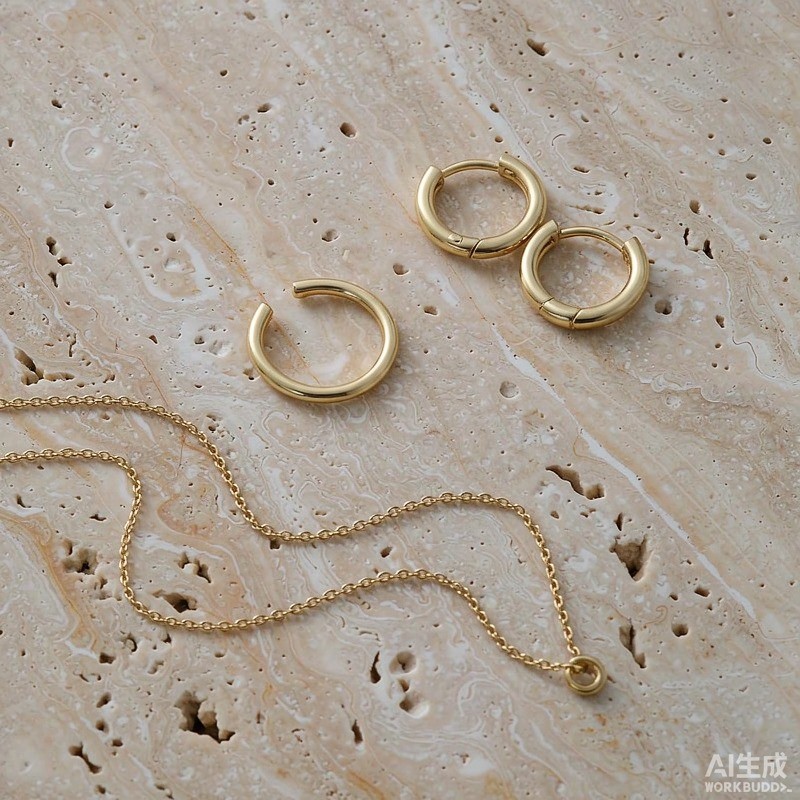
Flat-lays on stone or matte surfaces read as premium and convert well for wholesale buyers. Keep props minimal — one or two complementary pieces, never clutter. For lifestyle shots, show the jewelry on a neutral surface near natural light, but avoid implying the model is a real wearer in a way that misleads sizing. Consistency across your catalog (same angle, same backdrop) builds a recognizable brand shelf.
Editing Workflow
- Straighten and crop to a square or 4:5 frame for marketplace thumbnails.
- Correct white balance and lift shadows slightly — do not oversaturate the gold.
- Spot-remove dust and fingerprints; keep the CZ sparkle intact.
- Export at 1500–2000 px on the long edge, JPEG quality ~85, under 500 KB per image for fast loading — the standard spec for ecommerce jewelry photos.
Shooting Different Piece Types
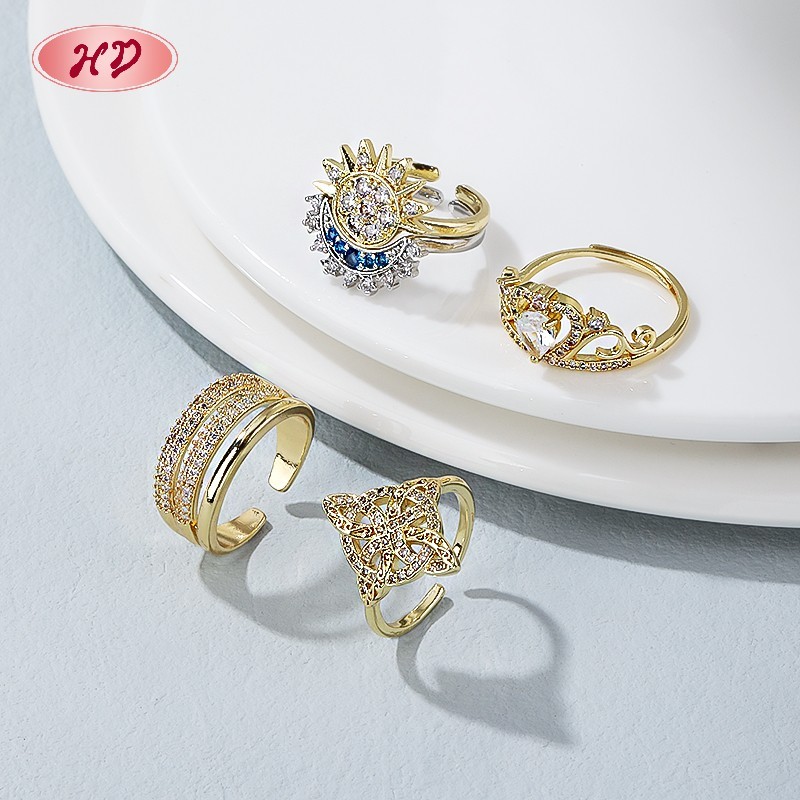
Rings reward a top-down or 45° macro that shows the CZ and the band profile. Earrings photograph best clipped to a stand or laid flat so both sides stay visible. Necklaces need a gentle curve on a neck form or pinned to a board to avoid kinks. Whatever the piece, lead with one hero shot that answers "what does this look like in real life?"
Common Mistakes to Avoid
- Shooting on a busy background that hides the product.
- Over-editing gold into an unrealistic yellow.
- Blurry macros from hand-holding instead of a tripod.
- Mismatched lighting between products in the same listing.
Hengdian (HD) Jewelry's Production Advantage
Great photos start with consistent product. Hengdian (HD) Jewelry is a direct factory wholesale partner based in Shanwei (Haifeng), Guangdong, with a warehouse in Guangzhou. Since 2006 we have run our own production lines with 14 process steps, releasing 500+ new designs every month across 18K gold-plated brass set with AAA CZ. Our standard 18K gold plating thickness is 0.1–0.3 micron (a Hengdian specification, customizable on request). Spot styles run 6-12 pieces per style; HAI-coded items start at 36 pieces. With OEM-ODM capability and 1V1 customer service, we help retailers and wholesalers build a branded collection they can photograph with confidence.
Frequently Asked Questions
What camera do I need to photograph gold-plated jewelry?
A recent smartphone with macro mode handles most marketplace listings well. For sharper CZ detail and full manual control, an entry-level mirrorless camera with a 60–100 mm macro lens on a tripod is ideal. The tripod matters more than the camera body.
How do I avoid reflections on gold-plated metal?
Use diffused, soft light from a lightbox or covered panels rather than bare bulbs, and position two equal lights at 45° on each side. A white reflector fills the shadow side. Avoid shiny backdrops that bounce hotspots into the metal.
What background works best for jewelry product photos?
A clean pure-white or consistent light-grey sweep reads as premium and passes marketplace rules. Keep it seamless with no creases, and let the jewelry cast only a soft shadow for depth.
Should I shoot in RAW or JPEG for jewelry?
Shoot RAW when your camera supports it — it preserves highlight detail on reflective gold and gives headroom for white-balance correction. Phones should use the largest JPEG setting, then edit lightly to keep the gold true.
How do I make AAA CZ stones look sparkly in photos?
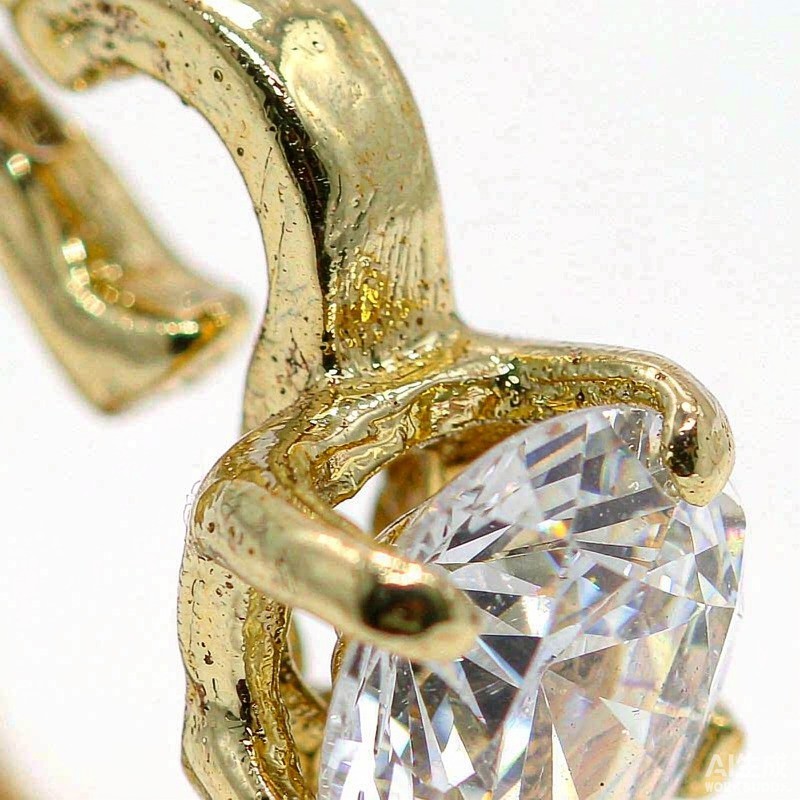
Focus precisely on the stone, use a soft rim light from behind to ignite the facets, and keep ISO low to avoid noise. A light touch of clarity in editing can sharpen facet edges without looking fake.
Can I photograph jewelry with a smartphone?
Yes. Use macro or portrait mode, tap to focus on the CZ, lock exposure, and mount the phone on a small tripod. Shoot near a window with diffused daylight or inside a lightbox, then crop to square for thumbnails.
Recommended Products to Photograph
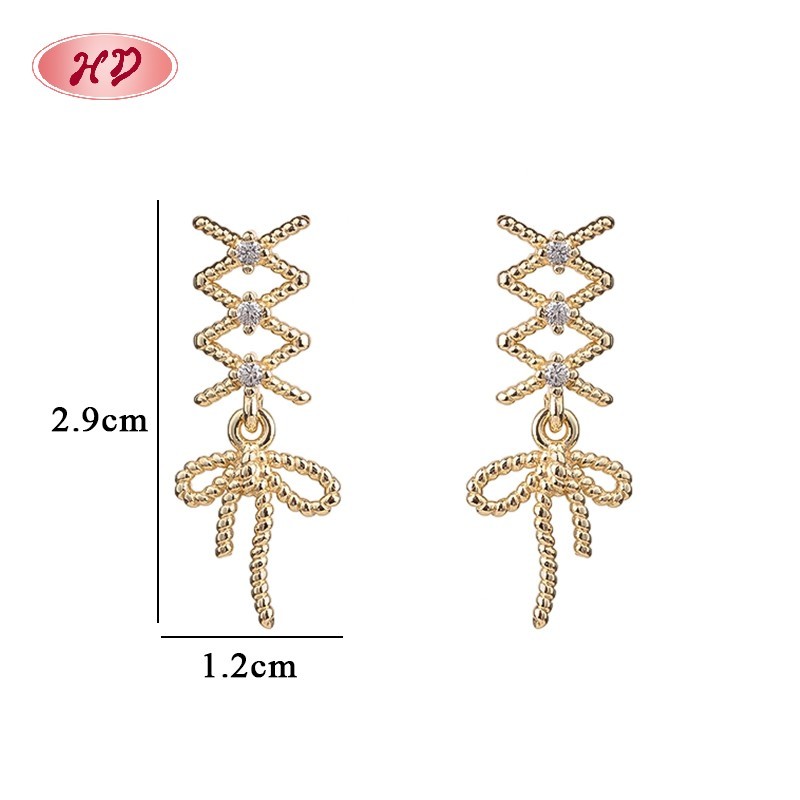
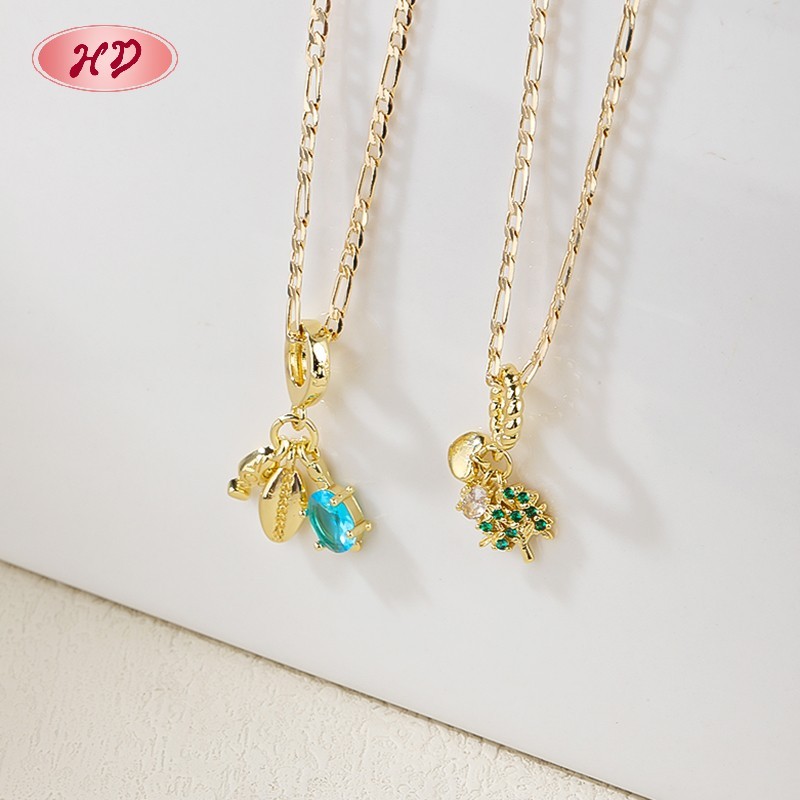
Want hi-res factory images or a custom shoot for your private-label line? Message us on WhatsApp and our 1V1 team will help.