How does daily friction affect gold plating?
- Share
- Issue Time
- Oct 5,2026
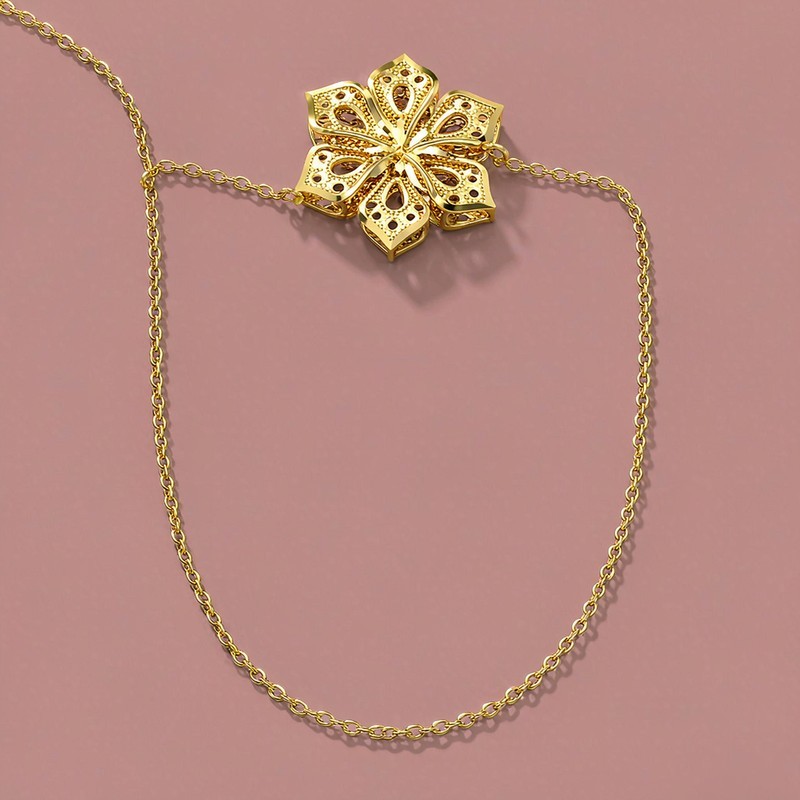
How Does Daily Friction Affect Gold Plating?
Daily friction is one of the main reasons gold plated jewelry changes appearance over time. Each time a plated surface rubs against skin, clothing, or desks, a microscopically thin amount of gold wears away. One day changes nothing visible, but thousands of small contacts add up month after month.
What Friction Actually Does to a Plated Surface
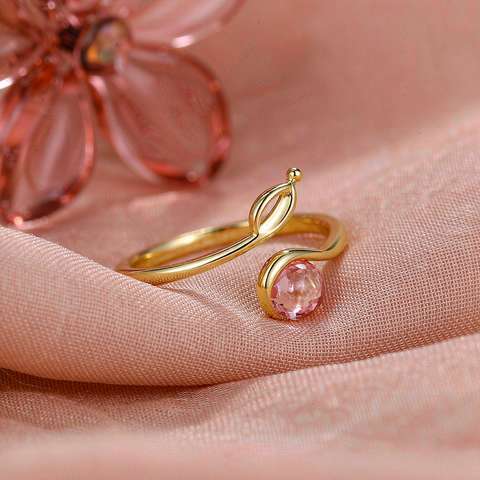
Gold plating is a thin layer of 18K gold bonded over a base metal - in fashion jewelry, usually brass. Measured in microns, the layer thins under repeated rubbing, and wear is not uniform: it appears first where contact pressure and movement are highest. As the gold thins, color shifts from bright gold toward the paler tone of the underlying metal.
Friction is purely mechanical, unlike tarnish from sweat and humidity. Both occur in daily wear, but friction concentrates at predictable high-contact points - so some areas of a worn piece fade faster than others.
The Highest-Friction Zones on Jewelry
Rings
Gripping, typing, and handwashing rub the shank and edges, so ring bands often show wear on the underside first.
Bracelets
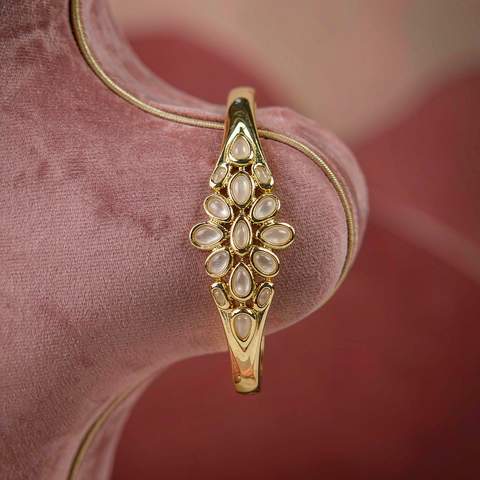
A bracelet resting on a desk is abraded while you work; clasps wear where they move against the wrist.
Necklace Chains
Chains rub against collars, scarves, and seatbelts, thinning fastest where they meet fabric.
Earring Posts
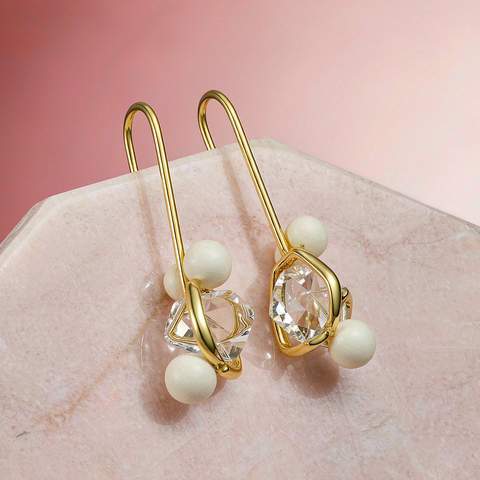
Posts and backs rub against skin and hair; light but frequent contact shows wear over months.
How to Slow Down Friction Wear
Remove rings and bracelets before workouts, cleaning, or repetitive gripping work.
Store each piece in a separate soft pouch or sealed bag so items never rub together.
Wipe pieces gently with a soft, dry cloth; avoid abrasive creams and stiff brushes.
Put jewelry on last and take it off first to reduce contact with zippers and bag straps.
How We Build Plating for Everyday Wear
At Hengdian (HD) Jewelry, plating durability starts with process control. Our 18K gold plated jewelry is made over a brass base in our own factory in Shanwei, Haifeng, Guangdong, where five production lines and fourteen in-house processes keep preparation, plating, and finishing under one roof.
Two points matter for friction resistance. First, thickness: our own factory standard applies 0.1 to 0.3 micron of 18K gold plating - an internal specification, not an industry-wide figure - and custom plating thickness is available on request. Second, compliance: our factory is SGS audited, and materials are lead-free with nickel release kept within REACH limits, verified by REACH, CE, and SGS reports.
Buyers can request 5 to 7 free samples of in-stock designs, with freight prepaid by the customer. With 40,000+ in-stock designs and 500+ new designs monthly, comparing friction performance across real styles is simple - browse current styles or learn more about our facility.
Need a plating specification matched to your market? Message us on WhatsApp at +86 134 1105 8700, send an inquiry, or visit our contact page - our 1V1 team replies with MOQ, plating options, and sample details.
Chat on WhatsAppQuick Answers
Does friction mean gold plated jewelry is low quality?
No. All plated jewelry wears mechanically at any thickness; better preparation and process control simply slow it down.
Which jewelry category wears fastest?
Rings usually show wear first, followed by bracelets and necklace chains.
Can worn plating be restored?
Yes. A workshop can re-plate a piece after cleaning and surface preparation.