Is peeling a sign of poor gold plating?
- Share
- Issue Time
- Oct 9,2026
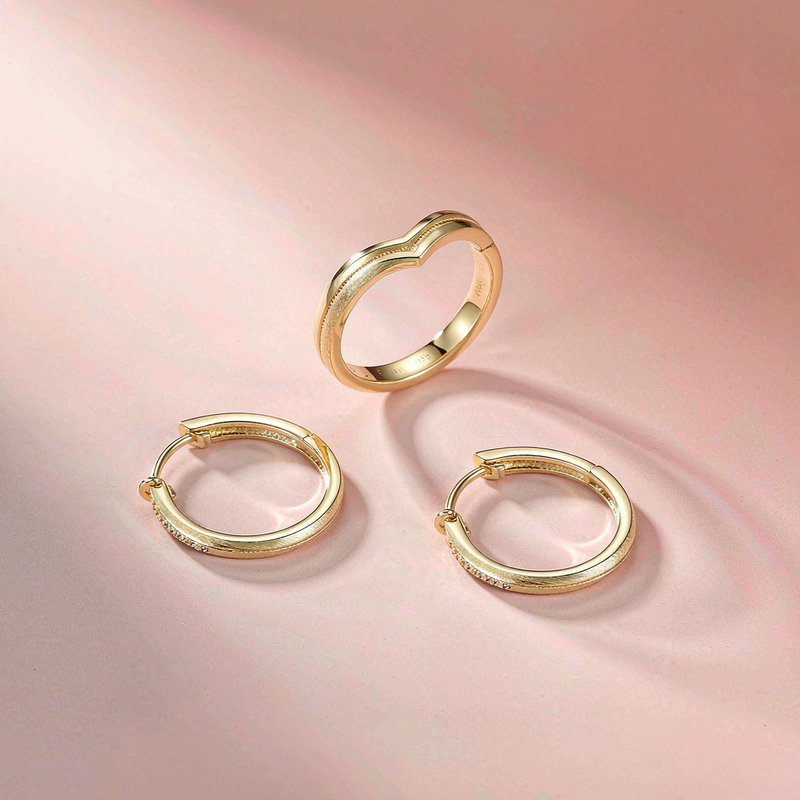
Peeling — when the gold layer lifts, cracks, or flakes off the base metal — is a warning sign. It usually points to weak adhesion or an under-spec plating process, not the slow, even dulling of normal wear.
What peeling actually looks like
Peeling shows up as curling edges, bare-metal patches, or thin flakes. Normal wear fades color evenly. If you see the base metal breaking through in spots instead of a uniform tone shift, that is peeling.
Why plating peels
Poor surface preparation
If the base metal is not cleaned and activated before plating, the gold has nothing to grip. Residual oil or oxide is the top cause of early peeling.
Plating applied too thin
A layer too thin to form a continuous, well-bonded film is fragile. Thickness and adhesion work together.
Chemical or chlorine attack
Pool water, perfume, and strong detergents can break the bond at the edges and lift the film, especially where plating was already marginal.
Hard abrasion or scraping
Dragging jewelry across rough surfaces can tear the film locally. Good adhesion resists this; weak adhesion gives way fast.
Is peeling always a sign of poor quality?
Most of the time, yes. Peeling within weeks of normal wear signals a weak bond or under-spec process. Harsh chemicals or a hard scrape can flake even good plating in one spot, but well-made plating with proper adhesion and controlled thickness should not peel in ordinary use. Extensive or early peeling is a quality problem.
How properly made plating holds up
Quality plating starts before the metal meets the bath. We run multi-step cleaning and activation, then control thickness to a defined spec — our house standard is 0.1–0.3 micron, a figure we set for our own line rather than an industry-wide rule, with custom thickness on request. Each batch passes adhesion and appearance checks, and production runs across 14 processes on 5 lines with a second QC at our warehouse. Pieces are lead-free, with nickel release within REACH limits.
If your plating peels
Peeling cannot be fixed with a polish at home. A jeweler can sometimes re-plate a piece, but for most fashion jewelry that costs more than a replacement. Contact your supplier about QC and any coverage first.
Quick answers
Can peeling gold plating be repaired?
Not at home. A jeweler may re-plate it, but for most fashion jewelry that costs more than a replacement. Ask your supplier about QC and coverage first.
Does peeling mean the jewelry is fake?
Not necessarily “fake,” but it does mean the plating was poorly applied. Even genuine gold plated jewelry can peel if adhesion and thickness were not controlled.
How do I avoid buying jewelry that peels?
Choose a supplier that states its plating thickness and process, runs adhesion tests, and offers samples. Ask how they control bond quality.
Does thinner plating peel more easily?
Thin plating wears through faster and, with a weak bond, flakes sooner. Both thickness and adhesion matter.
What wears plating fastest?
Frequent water, sweat, perfume, and chlorine contact, plus hard scraping. Removing jewelry for showering, swimming, and cleaning best protects the film.
Browse our catalog of 40,000+ designs, read about our factory, or send an inquiry. Contact us for samples (5–7 pieces, freight prepaid).